Roughly 8 to 11
Auto-belay walls, a harness and climbing shoes from the desk, and as many goes as they want in a session. Most children spend the first half hour working out that falling is fine, and the rest of it racing the wall.
Climbing and the playground have separate admissions. Where are you headed?
Planning a birthday? Explore party packages
Rock climbing
for kids and teens.
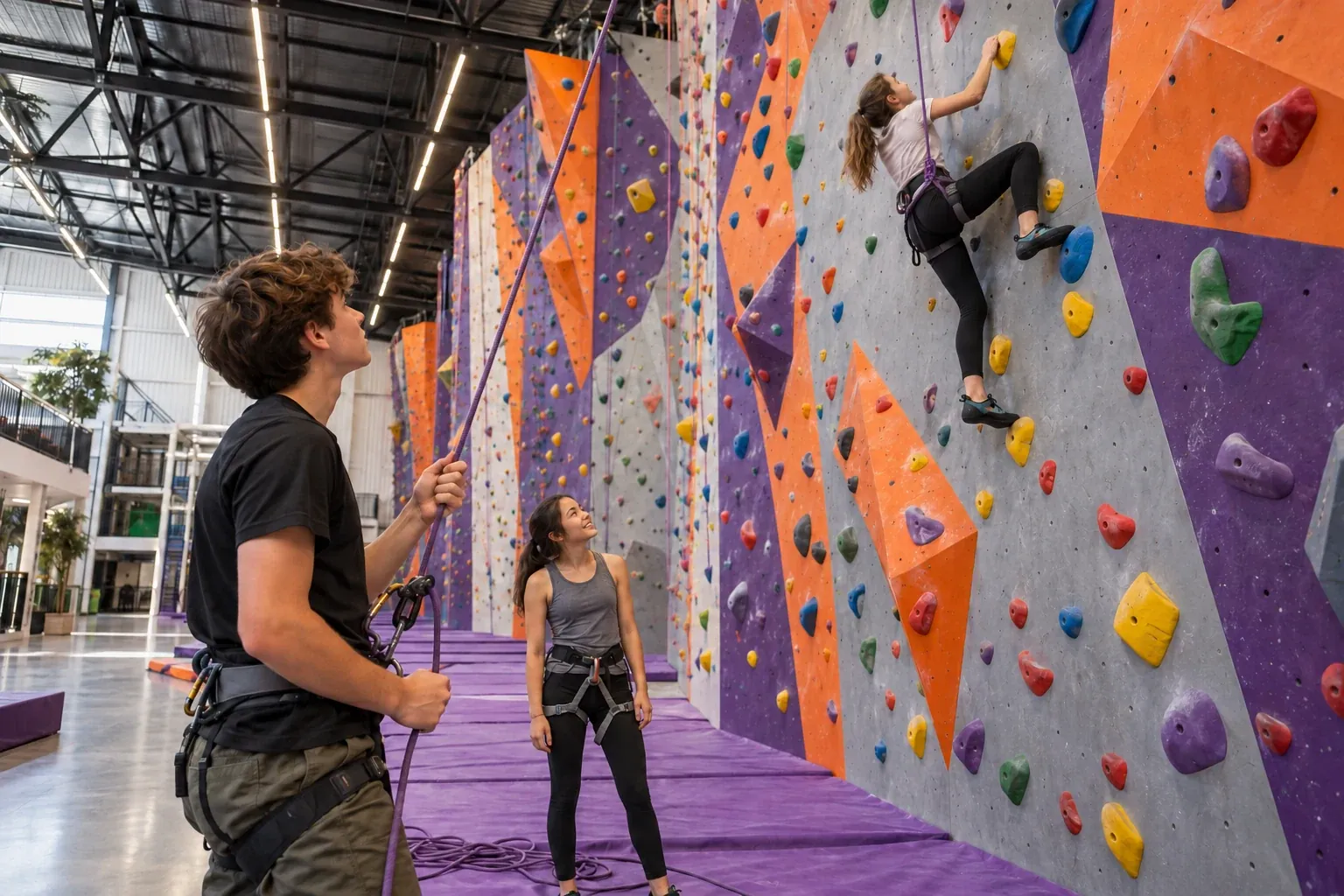
Almost every child who climbs here has never climbed before. Auto-belay walls, gear from the desk and an orientation before anyone goes up, from about eight years old through the teens.
Where to start
Almost every child who climbs here has never climbed before. The walls are built so that a first visit works without a lesson, a partner, or any gear of your own.
The usual starting point is an auto-belay wall. The rope is already attached at the top and takes up the slack as your child climbs, so nobody on the ground has to hold it. A child clips in, climbs as high as they want, lets go, and comes down gently. That removes the part most parents worry about.
From there most children move on to top-rope climbing with a partner, and some to bouldering, which is lower walls over thick mats and no rope at all. Children under fourteen need a separate bouldering orientation and a form signed by a parent or guardian before using that area.
Auto-belay walls, a harness and climbing shoes from the desk, and as many goes as they want in a session. Most children spend the first half hour working out that falling is fine, and the rest of it racing the wall.
The full height of the walls, up to thirty-two feet, plus top-rope climbing with a partner and the bouldering area with an orientation. This is the age where it stops being an outing and starts being a sport.
Adults climb on their own day pass. Plenty of families climb together, and a parent who wants to belay rather than climb can learn how at the desk.
Classes run with qualified instructors, and a kids' membership is $49 a month. The ten-visit punch card at $220 suits families who come once a fortnight.
What a first visit looks like
Nothing about a first visit requires preparation beyond the waiver.
Every climber needs a waiver completed by a parent or legal guardian. Doing it online before you arrive saves the queue at the desk, especially at weekends.
Wear something you can move in and bring socks. Climbing shoes and a harness are included with gear rental at the desk, so there is nothing to buy before a first visit. Long hair tied back, no jewellery on the hands.
Staff run an orientation before anyone climbs, including how to clip into an auto-belay and what to do at the top. Ask for it. It takes a few minutes and makes the whole session better.
Before you come
Anything else, just call. We would rather talk it through than have you guess.
Ask the teamThere is no hard minimum for the auto-belay walls, and children of about eight upward manage them comfortably. The limit in practice is whether a harness fits and whether the child wants to. Younger siblings are usually better suited to the indoor playground on the other side of the building, which has its own fixed kids' climbing wall.
Yes. An adult needs to be present and to have signed the waiver, but they do not need a climbing pass unless they want to climb themselves.
No. Climbing shoes and a harness come from the desk. Bring socks and clothes you can move in.
Not on a first visit. It is worth getting comfortable on the roped walls first. Children under fourteen also need a bouldering orientation and a bouldering agreement signed by a parent or legal guardian before using that area.
A kids' day pass is $20. A kids' membership is $49 a month and a ten-visit punch card is $220, both of which are worth it from about the third visit.
Ready when they are